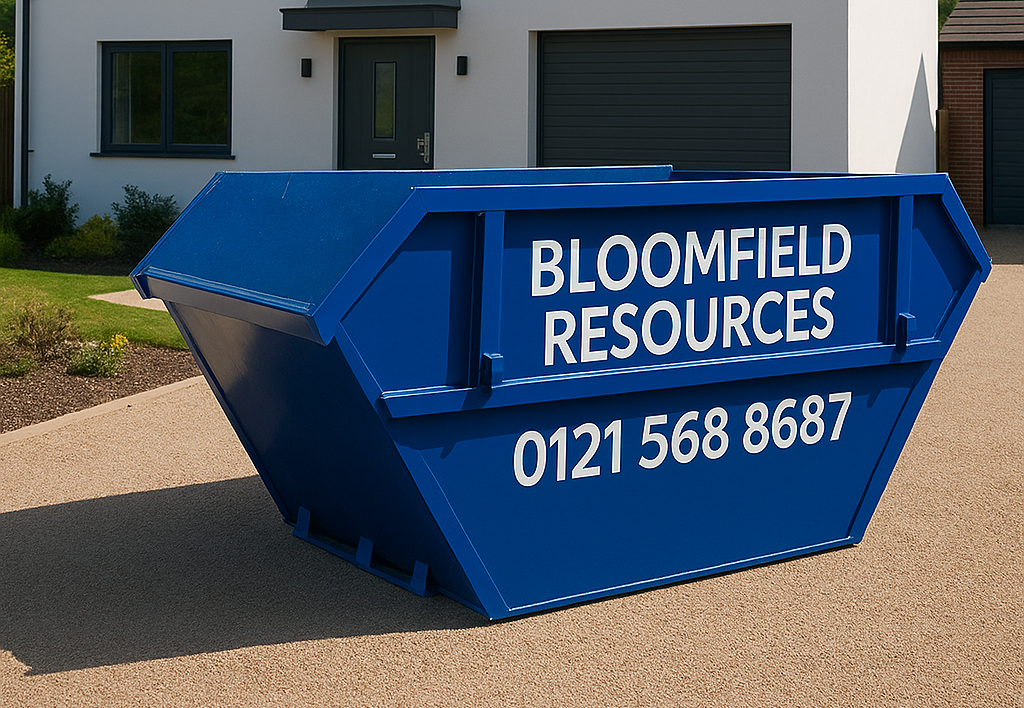
Choosing the wrong size is one of the most common mistakes customers make. This guide covers every skip we offer, with real examples of what fits, so you can get it right first time.
At a glance
| Skip | Capacity | Dimensions (L × W × D) | Best for |
|---|---|---|---|
| 4 yard | 40+ bin bags | 2m × 1.4m × 0.9m | Small clearouts, single rooms |
| 8 yard | 80+ bin bags | 3.8m × 1.8m × 1.2m | Kitchen/bathroom refits, garden clearances |
| 8 yard Enclosed | 80+ bin bags | 3.8m × 1.8m × 1.75m | As above, with a lockable lid |
| 10 yard | 100+ bin bags | 4m × 1.8m × 1.3m | Larger renovations, partial house clearances |
| 12 yard | 120+ bin bags | 4m × 1.8m × 1.5m | Full house clearances, extensions |
| 12 yard Enclosed | 120+ bin bags | 4m × 1.8m × 2.05m | As above, with a lockable lid |
| 14 yard | 140+ bin bags | 4.2m × 1.8m × 1.9m | Large scale domestic or light commercial |
| 16 yard | 160+ bin bags | 4.4m × 1.8m × 2m | Major construction, commercial clearances |
Not sure if a skip will fit on your driveway? Call us on 0121 568 8687 and we’ll help you work it out.
Skip sizes are measured in cubic yards. One cubic yard is roughly the size of a standard washing machine, so a 4 yard skip holds about four washing machines’ worth of waste.
The 4 yard is our smallest skip and the right choice for contained, manageable jobs. This could be a single room, a bathroom strip out, or a garden tidy.
What fits: Around 40 bin bags of general waste. Old flooring, broken furniture, garden cuttings, and a few bags of soil will sit comfortably in a 4 yard.
What it’s not suited for: Heavy materials like rubble, bricks or concrete fill a skip very quickly by weight before you’ve used the volume, all skips have weight limits, so bear that in mind if your waste is predominantly heavy.
Best for:
A 4 yard skip fits on most driveways without needing a road permit, which makes it the simplest option for smaller domestic jobs.
Filling tip
The 8 yard is our most popular skip for domestic customers. It’s a solid all-rounder and big enough for a proper renovation, compact enough to fit on most standard driveways.
What fits: Around 80 bin bags of waste – enough for a full kitchen or bathroom refit, a thorough garage or loft clearance, or a solid garden clearance with soil and green waste.
Best for:
If you’re torn between the 4 yard and the 8 yard, go with the 8. It costs a little more, but not nearly as much as booking a second skip mid-project.
Also available as an 8 yard enclosed – the same capacity, with a lockable lid. See the open vs enclosed section below.
The 10 yard is a useful step up when you know an 8 yard won’t quite cut it but you don’t need the full capacity of a 12. It’s a good fit for larger renovation projects spanning multiple rooms, or for jobs generating waste over several days.
Weight limit From the 10 yard upwards, skips are designed for lighter, bulky waste – not heavy inert materials. A full load of soil, rubble or concrete will exceed the weight limit before you’ve used the volume. If your job is predominantly heavy material, a smaller skip or a grab lorry is the right call.
Best for:
The 12 yard is the go-to choice for full house clearances and sizeable construction projects. At 120+ bin bags of capacity, it’s built for jobs where waste will accumulate over days or weeks.
Best for:
Bear in mind that skips placed on the road require a council permit. We handle the permit application on your behalf – it’s built into the service, so you don’t have to deal with the council directly.
Also available as a 12 yard enclosed has the same capacity, with a lockable lid. See the open vs enclosed section below.
At 140+ bin bags of capacity, the 14 yard sits between the 12 and the largest 16 yard option. It works well for larger domestic projects that have outgrown a 12 yard, or lighter commercial clearances where a full 16 isn’t necessary.
Best for:
The 16 yard is our largest skip and built for serious volume. At 160+ bin bags of capacity, it’s suited to major construction projects, commercial site clearances, and any job generating a high volume of waste over an extended period.
Best for:
For ongoing commercial projects that need regular skip exchanges as work progresses, ask us about our builders skip exchange service, it keeps sites moving without waiting on collections.
We offer enclosed versions of both the 8 yard and 12 yard skips. Here’s when each makes sense:
For most straightforward domestic jobs, the open skip is the right call. The enclosed option is worth the extra consideration if your skip will be on the road for a prolonged period.
If your skip needs to sit on a public road, pavement, or council owned land, you’ll need a permit from your local council. In the West Midlands, permit costs typically range from £20 to £75 depending on the council area and duration.
Permit tip As a general rule, councils are more likely to approve permits for skips up to 8 yards. Larger skips may be refused depending on street width and local authority policy, so if you’re planning a bigger skip on a road, it’s worth checking with us before booking.
We manage the permit application for you and incorporate it into your quote. If you can place the skip on a private driveway, no permit is needed and it’s usually the simpler option for domestic jobs.
Regardless of which size you hire, your waste must not be loaded higher than the top of the skip’s sides. This is a legal requirement, an overloaded skip can’t be safely transported and our driver won’t be able to collect it, resulting in a wasted journey charge.
If you’re worried about running out of space before your job is done, call us on 0121 568 8687 and we’ll arrange a skip exchange.
The type of waste matters as much as the volume. Some materials are prohibited in standard skips:
Heavy inert materials like concrete, bricks and soil fill a skip by weight very quickly. If your job is predominantly rubble or soil, a grab lorry may be more cost-effective and it removes large volumes in a single load without size constraints. Get in touch and we’ll advise which service makes more sense for your job.
When in doubt, go one size up. An unfilled skip costs nothing extra. A second skip collection costs you delivery, collection and disposal fees all over again.
Book online in minutes or give us a call and we’ll help you choose the right skip for your job.
Book a Skip Online → 0121 568 8687

Bloomfield Resources
Follow us

Within its first year of trading, Bloomfield Resources has achieved an exceptional environmental milestone, successfully recovering and recycling 90 percent of all waste generated...
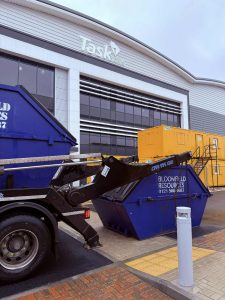
On busy sites, waste builds up quickly, and the last thing you need is a full skip slowing everything down. That’s where skip exchanges...
When it comes to getting rid of waste, it’s easy to assume everything can be treated the same. However, some everyday items require a...
 Fast, hassle-free booking
No hidden fees
Trusted by homeowners and businesses alike
Fast, hassle-free booking
No hidden fees
Trusted by homeowners and businesses alike


 My Basket

 Book A Skip